
99% of our SEO “competitors” work exclusively onsite… old school. Onsite SEO simply means working within the website itself. In the old school context, “onsite SEO” is managed by manipulating 5 website elements.
There are some others, like “alt” text, cross-links, XML sitemaps, meta keywords, etc. Some SEOs are aware of them. Some aren’t.
Of these, the HTML Title and Meta Description are the most important, followed by your XML sitemap. The rest simply no longer make much of an impact. Some, like the keywords meta tag may be a complete waste of time.
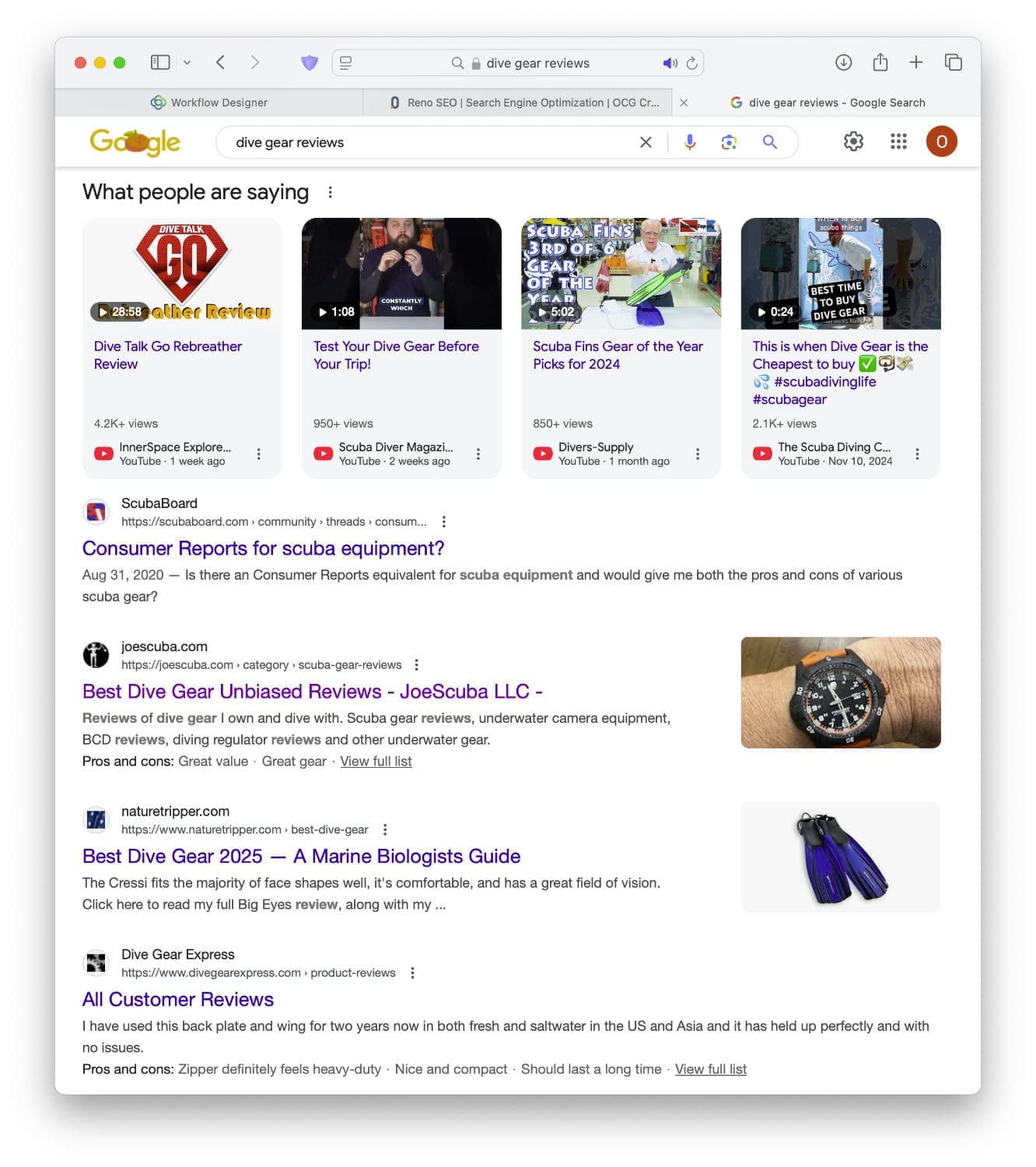
What isn’t a waste of time is Microdata, schema markup and the Open Graph Protocol. These are elements you can control directly within your website. These provide a means to signal to Google exactly what your website, and/or individual web pages, are about. You can include industry details, location information, products, pricing, star ratings and dozens of other elements. These will indicate to Google what “features” we want included on the SERP alongside the usual website links.
Examples of SERP features are star ratings, business hours, pricing, etc.
The important thing is to realize that it takes a lot more than old-school, onsite SEO to achieve top rankings if your market is competitive at all. SEO companies that only focus on traditional onsite SEO elements can’t compete for any but the easiest, least valuable keywords. It’s just that simple.